
First Firing Solution
A firing solution is not one number. It is a verified package of target, origin, bearing, range, ammunition, charge count, and elevation that must all describe the same shot.
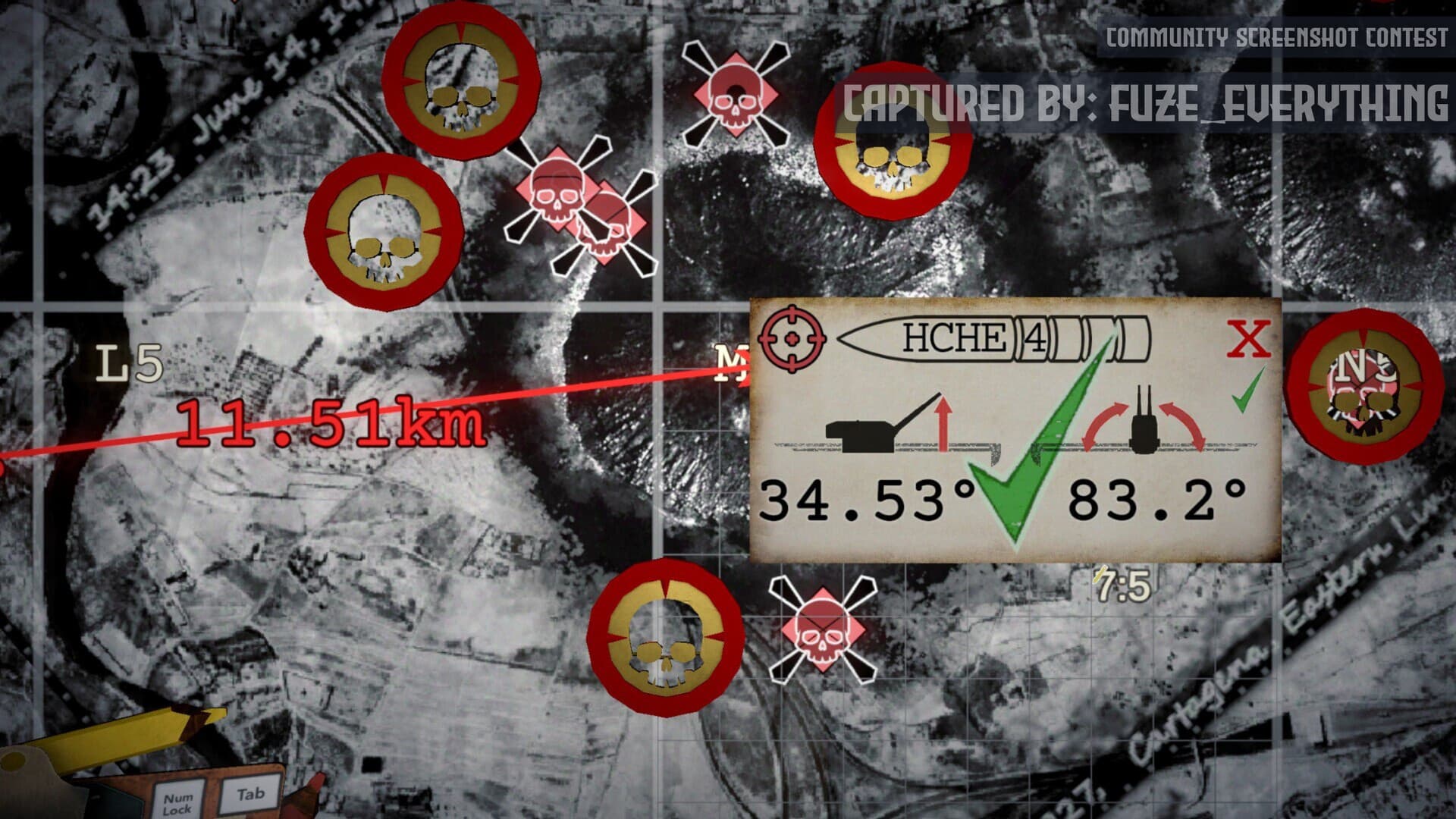
Write a complete firing card
Use one line per target and include target name, current NEST coordinate, bearing, range, shell, charge count, and elevation. Keeping these values together prevents one barrel from receiving another target's elevation or powder load.
Measure from the correct origin
Mark the current NEST and confirmed target, then draw the final measurement between those exact sub-cells. Bearings and ranges from spotters helped locate the target; they are not the gun's firing values.
- Confirm the NEST marker is current.
- Confirm the target rather than a spotter or landmark.
- Draw NEST to target.
- Copy the displayed bearing and range together.
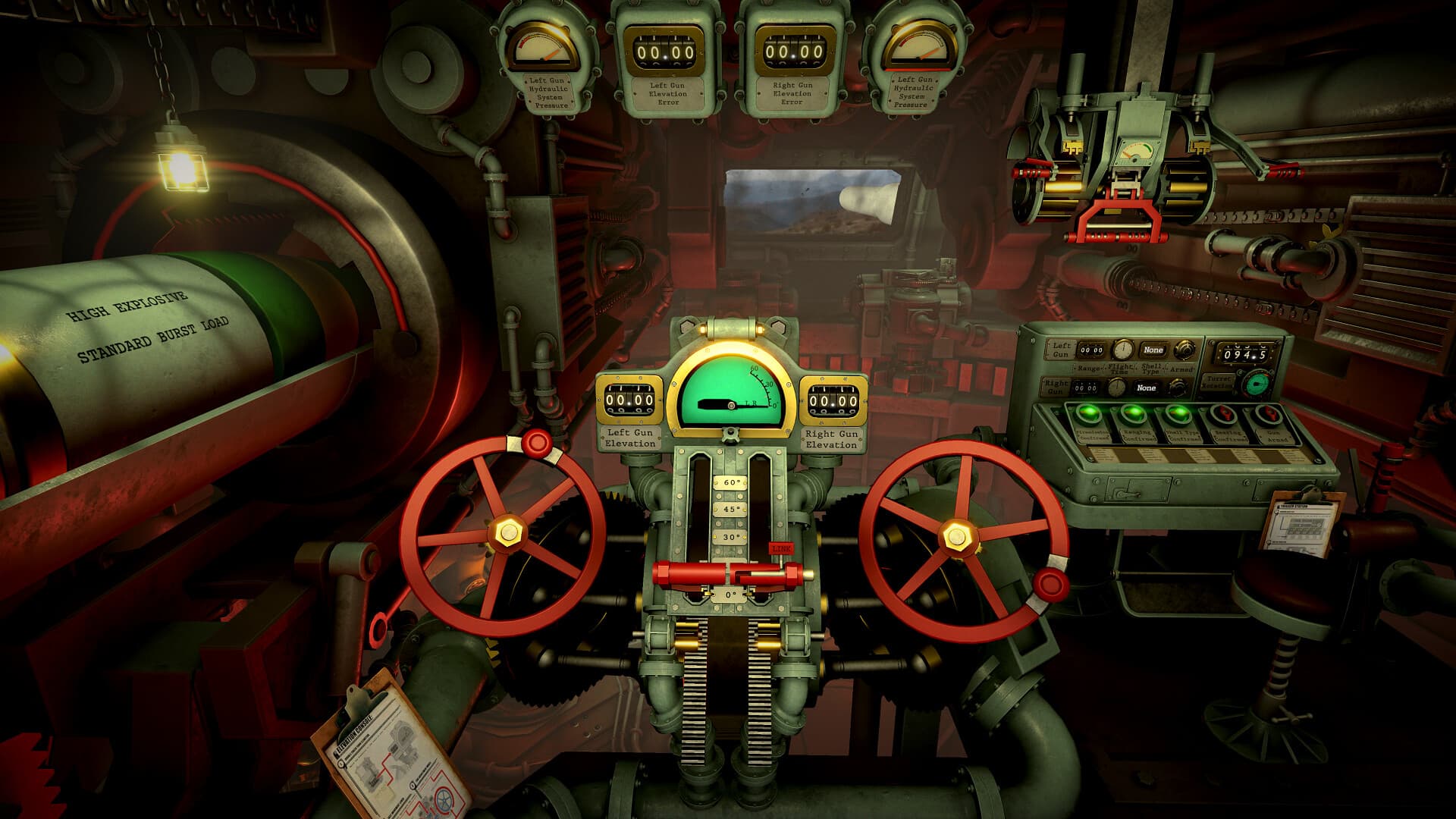
Generate the ballistic pair
Take the measured range to the calculator, select the charge count you intend to use, and record the returned elevation beside that same count. If the result seems extreme, recheck the map endpoints and range before experimenting with charges.
Transfer the solution to the gun
Load the mission-required shell and the recorded charges. Set traverse to bearing and the selected gun to elevation. Verify that the loader, calculator, and gun all refer to the same firing card.
Use the first impact as a diagnostic
If the shell is laterally wrong, recheck bearing, target mark, and origin. If it is short or long, recheck final range, calculated charges, physically loaded charges, and elevation. Change one confirmed input at a time so the second shot teaches you what failed.
Sources & verification
Mechanics can change after patches. Official references and clearly labeled community findings used for this guide:
Official Steam gameplay description ↗Steam Community basic operator guide ↗