
Teleprinter & Field Reports
Most plotting errors begin before the tactical map. A report can contain an origin, a subject, a bearing or distance, a required shell, and a timing condition; each part must retain its role when copied.

Field reference
Report parsing card
| Field | Question |
|---|---|
| Source | Who is reporting? |
| Subject | What object is described? |
| Clue | Coordinate, bearing, distance, or area? |
| Action | Observe, screen, or destroy? |
| Timing | What changes or expires? |
Parse every report into five fields
Separate source, subject, location clue, action, and timing. 'Spotter 2 reports a battery at bearing…' begins at Spotter 2 and describes the battery; it is not a bearing from the NEST.
Preserve message order
Later teleprints may correct a coordinate, identify a target previously described only by a clue, or add an ammunition requirement. Keep the sequence visible so the newest fact does not erase the origin needed to understand it.
Label confidence on the map
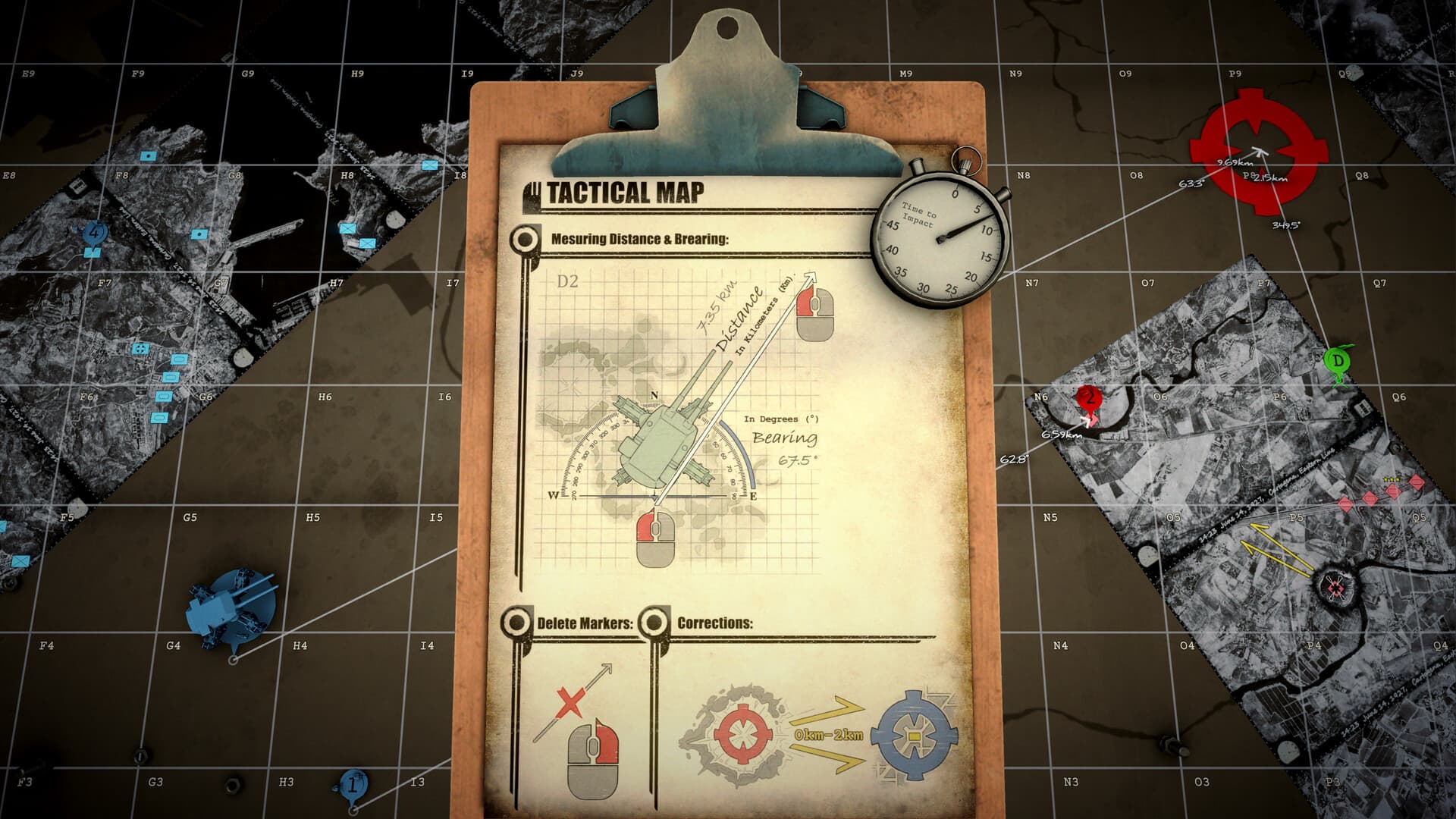
Mark direct coordinates as confirmed only when the report is explicit. Use a different color or note for estimated lines, distance arcs, search areas, and candidate intersections. A clean distinction prevents an attractive guess becoming a firing target.
Copy mission requirements before logistics
Write down named shell types, number of targets, deadlines, movement restrictions, and any requirement to observe rather than destroy. Check the ammunition store before spending time on a solution you cannot execute.
Resolve conflicting reports
Do not average incompatible bearings or silently choose the convenient one. Verify reporter number, coordinate sub-cell, direction, subject, and message time. If uncertainty remains, use another observer or recon method before firing.
Sources & verification
Mechanics can change after patches. Official references and clearly labeled community findings used for this guide:
Official Steam game description ↗Community map and measurement guide ↗