
Fire-Control Calculator
The calculator performs one narrow job: it pairs a trusted target range with the powder charge count you intend to load and returns the elevation for that trajectory. It cannot verify the target, current NEST position, turret bearing, physical load, or selected barrel.
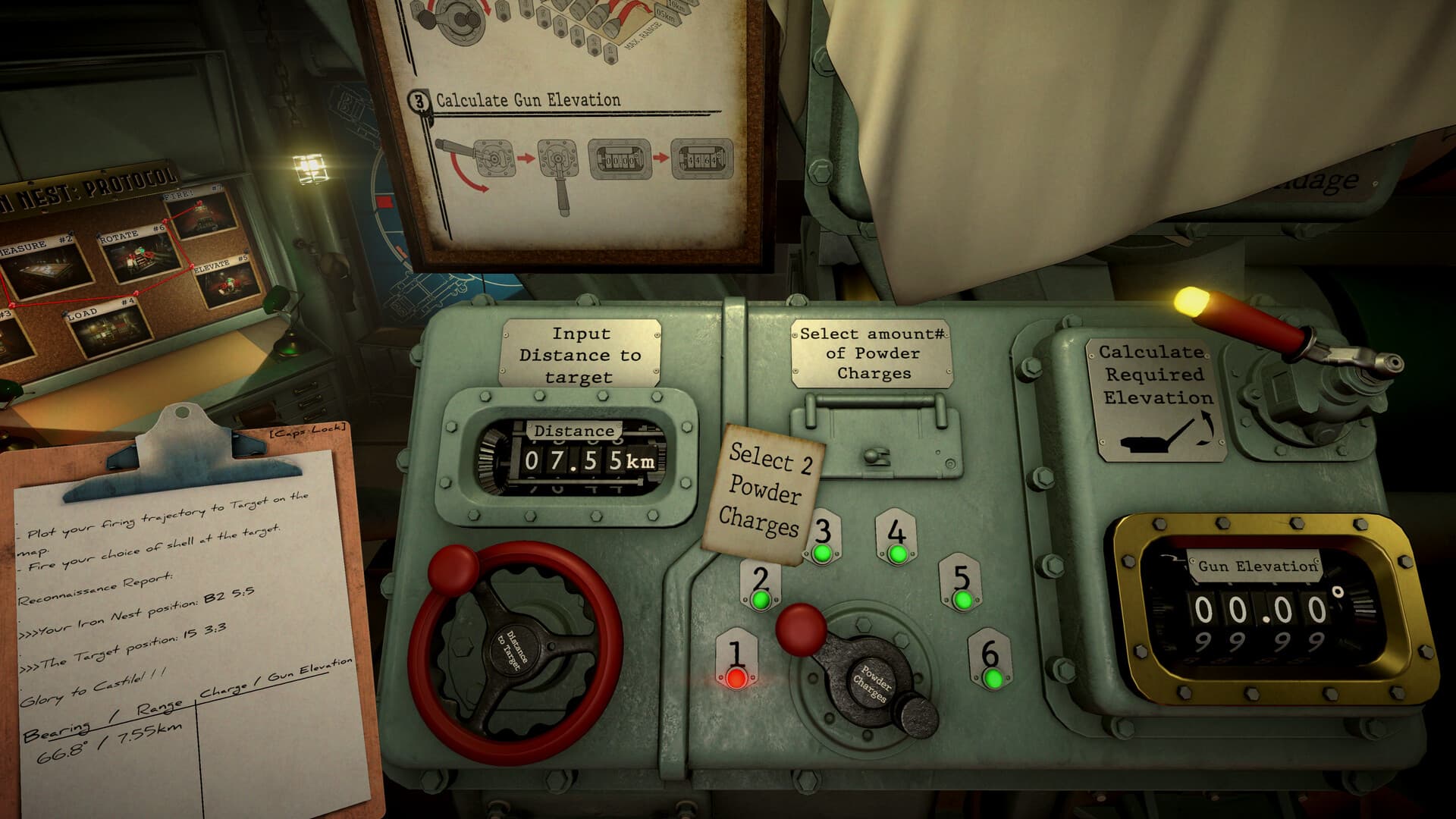
Define the calculator boundary
Range comes from the final tactical-map line. Charge count represents the intended physical propellant load. Elevation leaves the calculator for one selected gun. Bearing never enters this calculation, and the calculator has no way to know that the range came from an observer instead of the NEST. This boundary explains why directional errors should be diagnosed upstream at the map and traverse controls.
Record one inseparable trajectory
Write range, selected charges, and elevation on one line, then add target and barrel labels. A mathematically correct value becomes unsafe when copied to the other gun or paired with a different physical load. If you compare two charge counts, keep two complete candidate lines and cross out the one that is not selected.
- Confirm the final range and current NEST origin.
- Select a charge count that is available and practical.
- Copy the displayed elevation without rounding from memory.
- Read the same charge count at the loading station.
- Set elevation on the barrel named on the card.
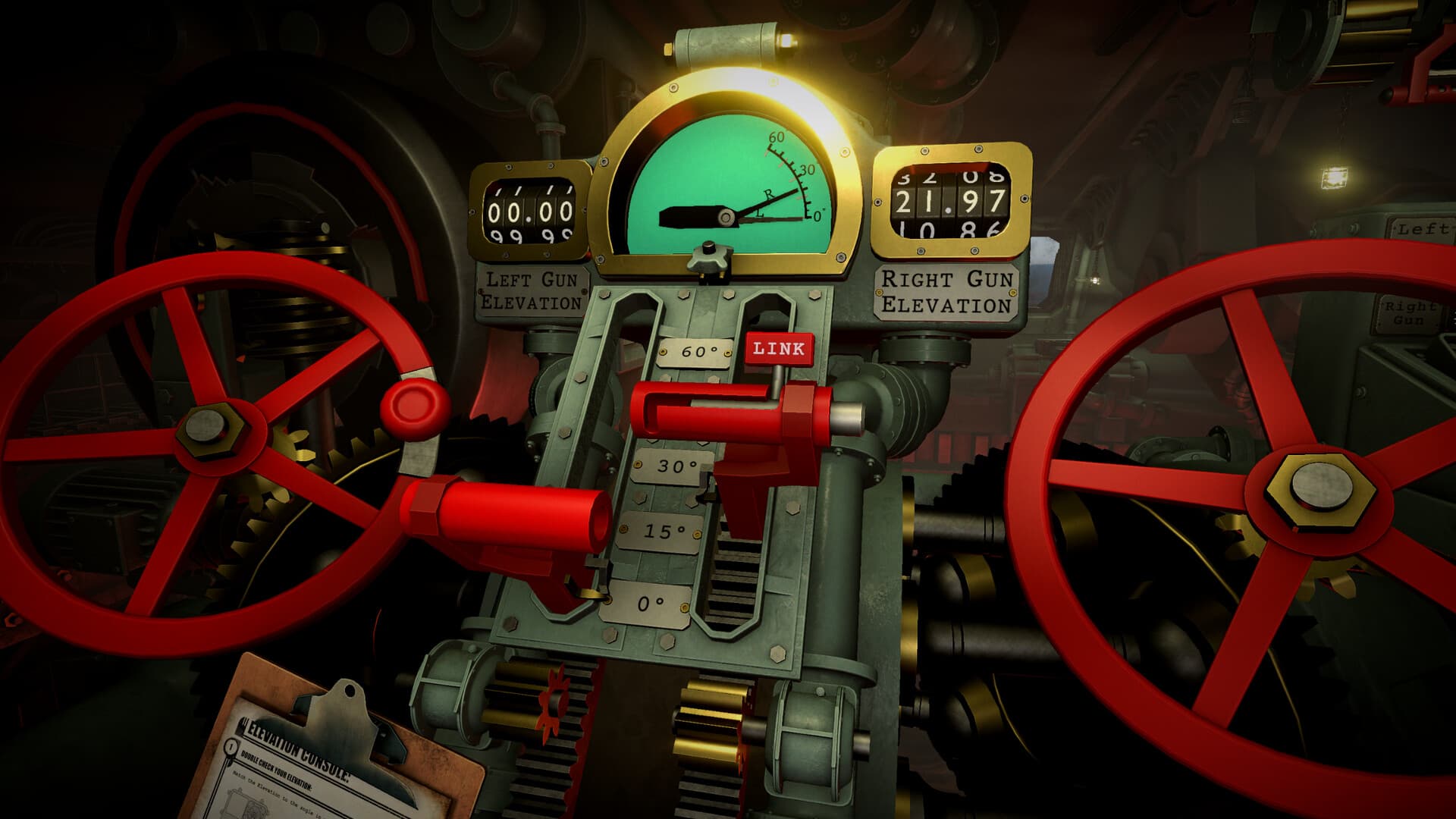
Handle implausible output
An extreme result is a signal to verify inputs before firing. Recheck the map endpoints, units, current origin, and charge selector. Trying another charge count is appropriate only after the geometry is trusted and when elevation limits, timing, or supply cost creates a real reason to choose another trajectory.
Separate depth error from direction error
A shell on the correct line but short or long points to range, charge selection, physical charges, or elevation. A shell at roughly the correct depth but left or right points to the target marker, map bearing, or traverse transfer. Change the smallest relevant input group and preserve the original card so the next impact explains what improved.
Sources & verification
Mechanics can change after patches. Official references and clearly labeled community findings used for this guide:
Official IRON NEST Steam page ↗IRON NEST Steam Community discussions ↗